Artist statement
This painting is about the presence that survives after a relationship has disappeared.
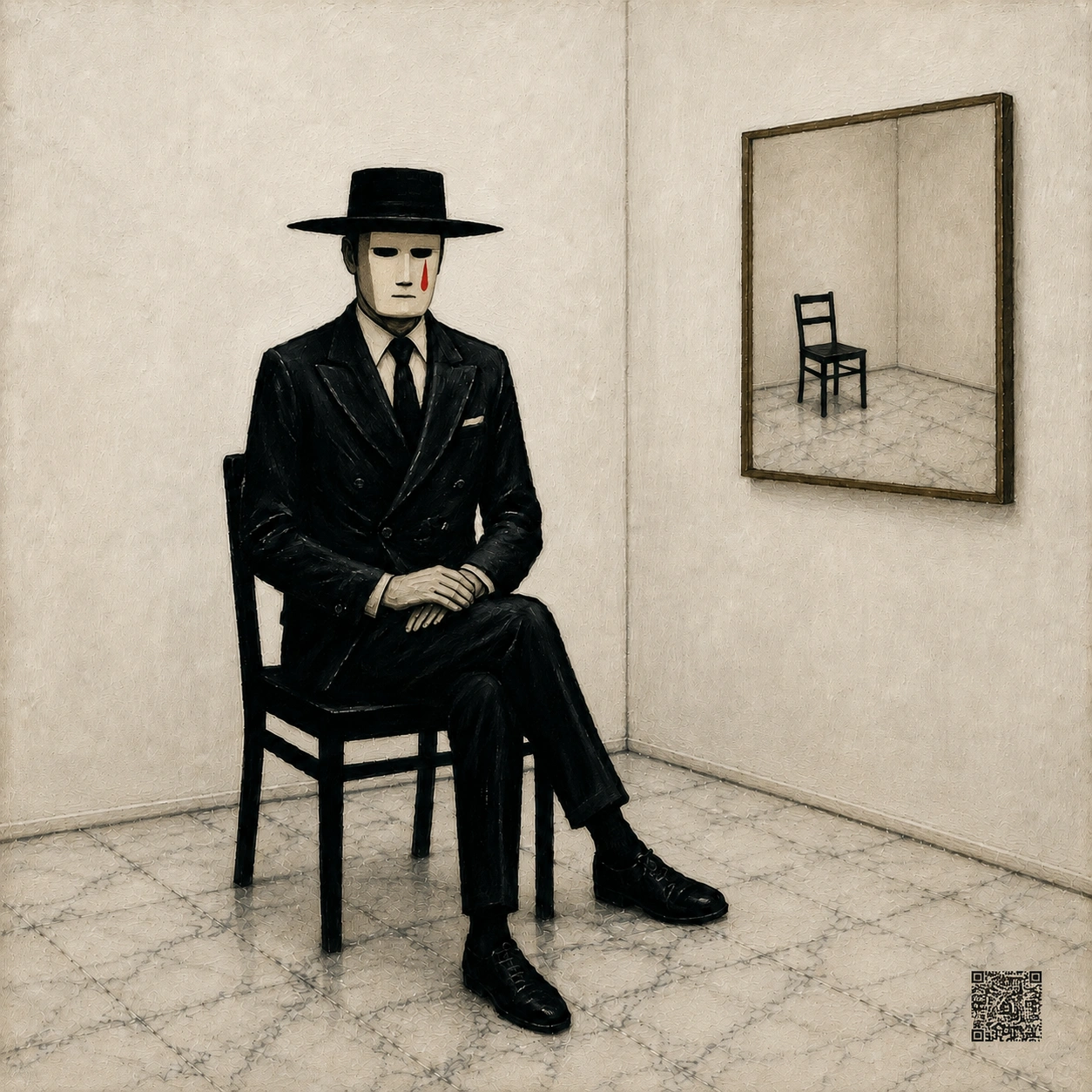
The masked figure occupies the room with an almost ceremonial discipline, but the true subject hangs on the wall: an empty chair in an even barer space.
The painting within the painting acts like a sealed memory. It does not show a precise event, only the place where someone might have been.
The red tear introduces a breach in the black attire. It makes visible what the mask refuses to explain: a quiet, contained pain strong enough to turn a white room into an intimate tribunal.
Long explanation
The Witness and the Empty Chair stages a masked man seated inside a deliberately stripped-down interior. The white walls, mineral floor and rigid posture create an atmosphere of silence, almost like a mental waiting room.
The empty chair shown inside the framed image shifts the emotional center of the work. It becomes a framed absence, a second space where no one comes to sit. The figure seems less to face the viewer than to guard that absence.
The black suit, hat and mask give the witness a cold authority, but the red tear breaks the surface. It does not overdramatize the scene; it makes it more unsettling, because it signals an emotion the rest of the body still controls.
The artwork asks what remains when the setting is still there but the encounter is missing. It turns an ordinary chair into a sign of mourning, memory and waiting, continuing Hugo Duchêne's masked figure series.