Artist statement
This painting speaks about power when only its form remains.
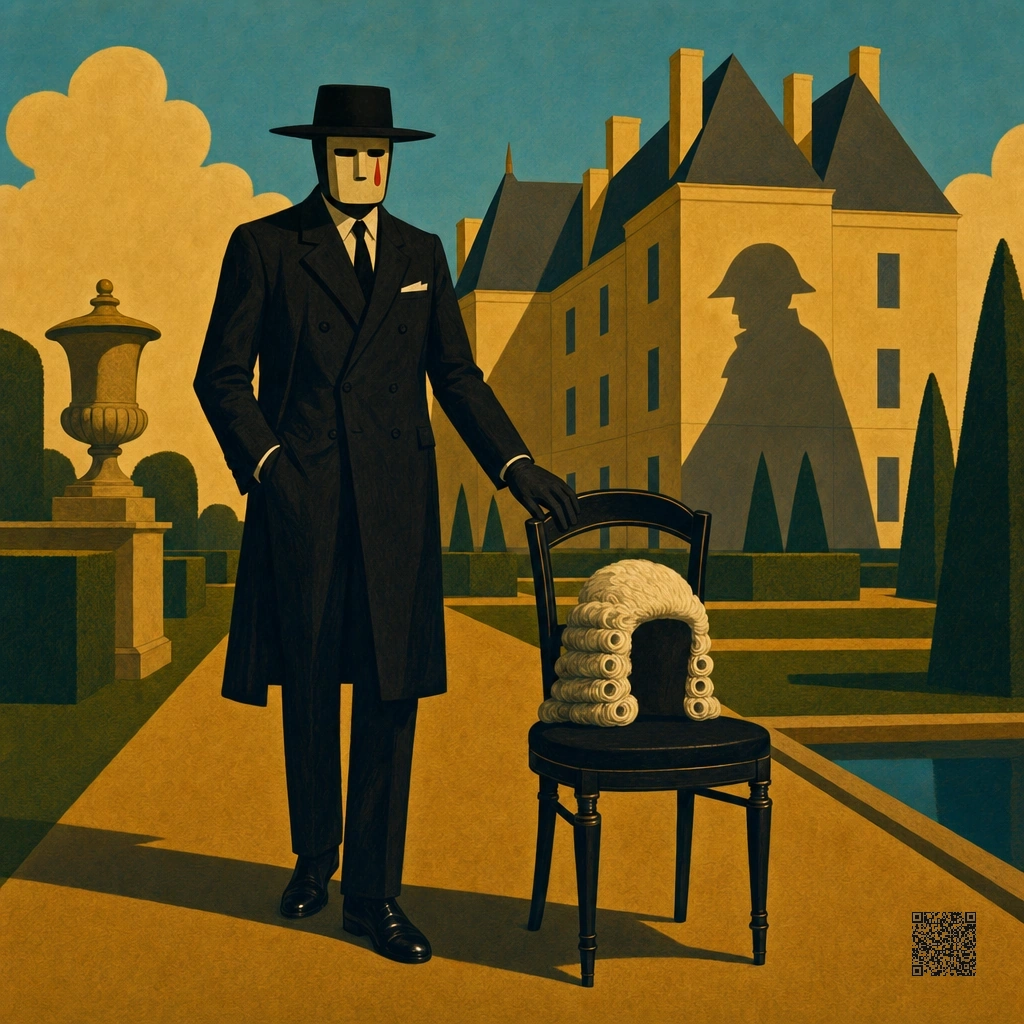
The chateau, gardens, Napoleonic shadow and wig placed on the chair create a theatre of authority, but the center is empty: no one truly sits there.
The masked figure does not celebrate Empire, nor does he simply condemn it. He stands beside what is left: symbols, posture, political memory, and the question of who still carries the burden of collective ambition.
The white wig turns the chair into an almost absurd relic. It evokes justice, the State, administrative nobility, but also the costume of a power that can outlive its own meaning.
Long explanation
The Empty Throne of Empire places the masked figure in a French chateau setting, between ordered gardens, classical architecture and a Napoleonic shadow. The image does not show Napoleon himself: it shows his imprint, projected like a memory too large for the present.
The chair in the foreground becomes the real character of the scene. It carries a white wig instead of a body, as if authority had been reduced to its accessories. Power is still recognizable, but no longer embodied.
The masked figure keeps a cold distance. His hand on the chair can read as control, mourning or recognition. He does not take the empty place; he measures the cost of inheriting greatness when no one clearly knows what to do with it.
The artwork holds a central tension: fascination with older forms of power and anxiety before their vacancy. It asks what remains of an empire when its signs survive, but the will that animated them has disappeared.